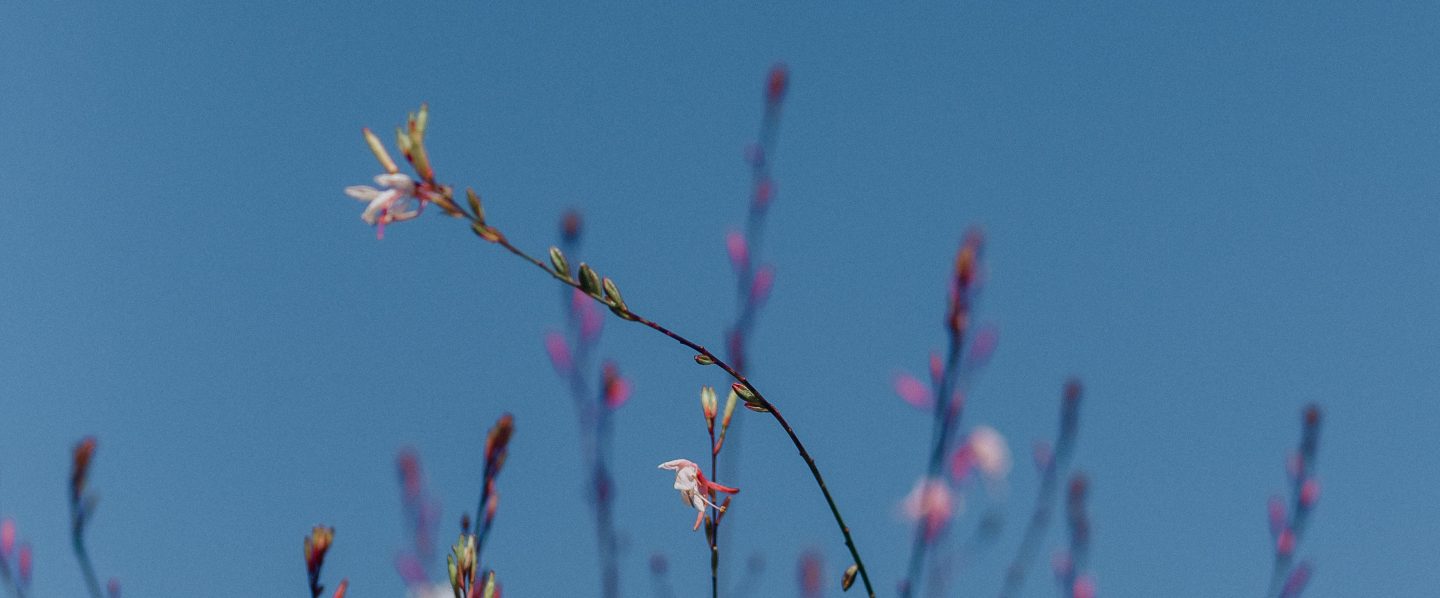

C’est bien grâce à la beauté qu’en dépit des conditions tragiques nous nous attachons à la vie. Tant qu’il y aura une aurore qui annonce le jour, un oiseau qui se gonfle de chant, une fleur qui embaume l’air, un visage qui nous émeut, une main qui esquisse un geste de tendresse, nous nous attarderons sur cette terre si souvent dévastée.
Christian Bobin
Il y a ainsi des gens qui vous délivrent de vous-mêmes aussi naturellement que peut le faire la vue d’un cerisier en fleur ou d’un chaton jouant à attraper sa queue. Ces gens, leur vrai travail, c’est leur présence.
Acrobatas
Subamos!
Subamos acima
Subamos além, subamos
Acima do além, subamos!
Com a posse física dos braços
Inelutavelmente galgaremos
O grande mar de estrelas
Através de milênios de luz.
Subamos!
Como dois atletas
O rosto petrificado
No pálido sorriso do esforço
Subamos acima
Com a posse física dos braços
E os músculos desmesurados
Na calma convulsa da ascensão.
Oh, acima
Mais longe que tudo
Além, mais longe que acima do além!
Como dois acrobatas
Subamos, lentíssimos
Lá onde o infinito
De tão infinito
Nem mais nome tem
Subamos!
Tensos
Pela corda luminosa
Que pende invisível
E cujos nós são astros
Queimando nas mãos
Subamos à tona
Do grande mar de estrelas
Onde dorme a noite
Subamos!
Tu e eu, herméticos
As nádegas duras
A carótida nodosa
Na fibra do pescoço
Os pés agudos em ponta.
Como no espasmo.
E quando
Lá, acima
Além, mais longe que acima do além
Adiante do véu de Betelgeuse
Depois do país de Altair
Sobre o cérebro de Deus
Num último impulso
Libertados do espírito
Despojados da carne
Nós nos possuiremos.
E morreremos
Morreremos alto, imensamente
Imensamente alto.
Songs of myself
A child said What is the grass? fetching it to me with full hands;
How could I answer the child? I do not know what it is any more than he.
I guess it must be the flag of my disposition, out of hopeful green stuff woven.
Or I guess it is the handkerchief of the Lord,
A scented gift and remembrancer designedly dropt,
Bearing the owner’s name someway in the corners, that we may see and remark, and say Whose?
Or I guess the grass is itself a child, the produced babe of the vegetation.
Or I guess it is a uniform hieroglyphic,
And it means, Sprouting alike in broad zones and narrow zones,
Growing among black folks as among white,
Kanuck, Tuckahoe, Congressman, Cuff, I give them the same, I receive them the same.
And now it seems to me the beautiful uncut hair of graves.
Tenderly will I use you curling grass,
It may be you transpire from the breasts of young men,
It may be if I had known them I would have loved them,
It may be you are from old people, or from offspring taken soon out of their mothers’ laps,
And here you are the mothers’ laps.
This grass is very dark to be from the white heads of old mothers,
Darker than the colorless beards of old men,
Dark to come from under the faint red roofs of mouths.
O I perceive after all so many uttering tongues,
And I perceive they do not come from the roofs of mouths for nothing.
I wish I could translate the hints about the dead young men and women,
And the hints about old men and mothers, and the offspring taken soon out of their laps.
What do you think has become of the young and old men?
And what do you think has become of the women and children?
They are alive and well somewhere,
The smallest sprout shows there is really no death,
And if ever there was it led forward life, and does not wait at the end to arrest it,
And ceas’d the moment life appear’d.
All goes onward and outward, nothing collapses,
And to die is different from what any one supposed, and luckier.
*
My tread scares the wood-drake and wood-duck on my distant and day-long ramble,
They rise together, they slowly circle around.
I believe in those wing’d purposes,
And acknowledge red, yellow, white, playing within me,
And consider green and violet and the tufted crown intentional,
And do not call the tortoise unworthy because she is not something else,
And the jay in the woods never studied the gamut, yet trills pretty well to me,
And the look of the bay mare shames silliness out of me.
*
I am of old and young, of the foolish as much as the wise,
Regardless of others, ever regardful of others,
Maternal as well as paternal, a child as well as a man,
Stuff’d with the stuff that is coarse and stuff’d with the stuff that is fine,
One of the Nation of many nations, the smallest the same and the largest the same,
A Southerner soon as a Northerner, a planter nonchalant and hospitable down by the Oconee I live,
A Yankee bound my own way ready for trade, my joints the limberest joints on earth and the sternest joints on earth,
A Kentuckian walking the vale of the Elkhorn in my deer-skin leggings, a Louisianian or Georgian,
A boatman over lakes or bays or along coasts, a Hoosier, Badger, Buckeye;
At home on Kanadian snow-shoes or up in the bush, or with fishermen off Newfoundland,
At home in the fleet of ice-boats, sailing with the rest and tacking,
At home on the hills of Vermont or in the woods of Maine, or the Texan ranch,
Comrade of Californians, comrade of free North-Westerners, (loving their big proportions,)
Comrade of raftsmen and coalmen, comrade of all who shake hands and welcome to drink and meat,
A learner with the simplest, a teacher of the thoughtfullest,
A novice beginning yet experient of myriads of seasons,
Of every hue and caste am I, of every rank and religion,
A farmer, mechanic, artist, gentleman, sailor, quaker,
Prisoner, fancy-man, rowdy, lawyer, physician, priest.
I resist any thing better than my own diversity,
Breathe the air but leave plenty after me,
And am not stuck up, and am in my place.
(The moth and the fish-eggs are in their place,
The bright suns I see and the dark suns I cannot see are in their place,
The palpable is in its place and the impalpable is in its place.)
*
21
I am the poet of the Body and I am the poet of the Soul,
The pleasures of heaven are with me and the pains of hell are with me,
The first I graft and increase upon myself, the latter I translate into a new tongue.
I am the poet of the woman the same as the man,
And I say it is as great to be a woman as to be a man,
And I say there is nothing greater than the mother of men.
I chant the chant of dilation or pride,
We have had ducking and deprecating about enough,
I show that size is only development.
Have you outstript the rest? are you the President?
It is a trifle, they will more than arrive there every one, and still pass on.
I am he that walks with the tender and growing night,
I call to the earth and sea half-held by the night.
Press close bare-bosom’d night—press close magnetic nourishing night!
Night of south winds—night of the large few stars!
Still nodding night—mad naked summer night.
Smile O voluptuous cool-breath’d earth!
Earth of the slumbering and liquid trees!
Earth of departed sunset—earth of the mountains misty-topt!
Earth of the vitreous pour of the full moon just tinged with blue!
Earth of shine and dark mottling the tide of the river!
Earth of the limpid gray of clouds brighter and clearer for my sake!
Far-swooping elbow’d earth—rich apple-blossom’d earth!
Smile, for your lover comes.
Prodigal, you have given me love—therefore I to you give love!
O unspeakable passionate love.
*
Encompass worlds, but never try to encompass me,
I crowd your sleekest and best by simply looking toward you.
Writing and talk do not prove me,
I carry the plenum of proof and every thing else in my face,
With the hush of my lips I wholly confound the skeptic
*
Logic and sermons never convince
The damp of the night drives deeper into my soul
*
I play not a march for victors only… I play great
marches for conquered and slain persons.
Have you heard that it was good to gain the day?
I also say it is good to fall… battles are lost in the same spirit as they are won.
I sound triumphal drums for the dead… I fling
through the embouchures the loudest and gayest
music to them,
Vivas to those who have failed, and to those whose
war-vessels sank in the sea, and those themselves who
sank in the sea,
and to all generals that lost engagements, and all
overcome heroes, and the numberless unknown heroes,
equal to the greatest heroes unknown.
Ostinato
*
Au premier jour des vacances, courant à la grève sous les grands nuages d’été pour se jeter tout cru dans l’alcool pétillant et salé, creusant le talus des vagues, riant au anges sur leur dos qui enflent et se brisent en éclats, échouant à leur frange pour rouler dans la froide douceur de l’écume, les membres rougis à blanc comme le fer par le feu.
*
Si longtemps reclus au loin, il revoit plein de la lumière la plus gaie le peu de jours qu’ils furent ensemble. Il aura appris à ses pieds le bonheur de rire et parfois, la nuque sur ses genoux, le charme des vieilles rengaines qui semblaient aux yeux ensommeillés de l’enfant voler toutes légères dans l’espace, effleurer les hautes boiseries de la salle où il retournait le soir en coup de vent implorer une dernière chanson et une autre encore qu’elle lui accordait de bonne grâce, non sans un peu le gronder d’avoir quitté le lit après l’heure du dernier baiser.
*
Ce regard très seul comme déjà repu du théâtre et que le terrible destin du monde n’aiguise plus, attentif seulement au temps personnel que chaque battement du cœur lui mesure, sans hâte ni patience attendant que la mort l’attache aux cris des vivants qui continueront par toute la terre à retentir dans l’exil et le déchaînement des combats
*
Depuis la nuit des temps, le soleil, toujours ce même soleil qui étale à l’ouest sa splendide boucherie avant de plonger en terre.
*
Le cortège nocturne des jeunes flibustiers arrimés comme des chèvres aux redoutes guerrières et ceux qu’il entend rire sans les voir, l’embrun qui poisse le visage, les mouettes d’une blancheur d’amande si nombreuses à quadriller l’espace, la ruée des vagues panachées d’écume éclaboussant, drossant la grève où elles s’éparpillent dans un roulement de billes, la course en plein vent sous les nuages avec le bain dans la mer à minuit et tout ce sel frais sur la bouche, c’est le ravissement de vivre, c’est l’enfance débridée, son appétit, ses rudes exploits, sa légèreté reconquise, c’est le puissant concert de l’air et des eaux que, loin du rivage emmuré, il entendait rythmer en sourdine la fable aux onze figures vocales, ce bouillon de menthe et de lait qui lui enflamme le sang, cette rumeur éolienne perdue ici sur le papier …
*
Baldwin
Life is tragic simply because the earth turns and the sun inexorably rises and sets, and one day, for each of us, the sun will go down for the last, last time. Perhaps the whole root of our trouble, the human trouble, is that we will sacrifice all the beauty of our lives, will imprison ourselves in totems, taboos, crosses, blood sacrifices, steeples, mosques, races, armies, flags, nations, in order to deny the fact of death, which is the only fact we have. It seems to me that one ought to rejoice in the fact of death—ought to decide, indeed, to earn one’s death by confronting with passion the conundrum of life. One is responsible to life: It is the small beacon in that terrifying darkness from which we come and to which we shall return. One must negotiate this as nobly as possible, for the sake of those who are coming after us.
The fire next time
Il restera de toi…
Il restera de toi ce que tu as donné.
Au lieu de le garder dans des coffres rouillés:
Il restera de toi, de ton jardin secret,
Une fleur oubliée qui ne s’est pas fanée.
Ce que tu as donné
En d’autres fleurira.
Celui qui perd sa vie
Un jour la trouvera.
Il restera de toi ce que tu as offert
Entre les bras ouverts un matin au soleil.
Il restera de toi ce que tu as perdu,
Que tu as attendu plus loin que les réveils.
Ce que tu as souffert
En d’autres revivra.
Celui qui perd sa vie
Un jour la trouvera.
Il restera de toi une larme tombée,
Un sourire germé sur les yeux de ton cœur.
Il restera de toi ce que tu as semé
Que tu as partagé aux mendiants du bonheur.
Ce que tu as semé
En d’autres germera.
Celui qui perd sa vie
Un jour la trouvera.
le 14 Juillet
Pour un captif, souvenir plein de charmes !
J’étais bien jeune ; on criait : Vengeons-nous !
À la Bastille ! aux armes ! vite, aux armes !
Marchands, bourgeois, artisans couraient tous. (bis.)
Je vois pâlir et mère et femme et fille ;
Le canon gronde aux rappels du tambour. (bis.)
| Victoire au peuple ! il a pris la Bastille ! Un beau soleil a fêté ce grand jour, | } bis. bis. |
A fêté ce grand jour e. (bis.)
Enfants, vieillards, riche ou pauvre, on s’embrasse.
Les femmes vont redisant mille exploits.
Héros du siége, un soldat bleu qui passe f
Est applaudi des mains et de la voix.
Le nom du roi frappe alors mon oreille ;
De Lafayette on parle avec amour.
La France est libre et ma raison s’éveille.
Un beau soleil a fêté ce grand jour,
A fêté ce grand jour.
Le lendemain un vieillard docte et grave
Guida mes pas sur d’immenses débris.
« Mon fils, dit-il, ici d’un peuple esclave,
« Le despotisme étouffait tous les cris.
« Mais des captifs pour y loger la foule,
« Il creusa tant au pied de chaque tour,
« Qu’au premier choc le vieux château s’écroule.
« Un beau soleil a fêté ce grand jour,
« A fêté ce grand jour.
« La Liberté, rebelle antique et sainte,
« Mon fils, s’armant des fers de nos aïeux,
« À son triomphe appelle en cette enceinte
« L’Égalité, qui redescend des cieux.
« De ces deux sœurs la foudre gronde et brille.
« C’est Mirabeau tonnant contre la cour.
« Sa voix nous crie : Encore une Bastille !
« Un beau soleil a fêté ce grand jour,
« A fêté ce grand jour.
« Où nous semons chaque peuple moissonne.
« Déjà vingt rois, au bruit de nos débats,
« Portent, tremblants, la main à leur couronne,
« Et leurs sujets de nous parlent tout bas.
« Des droits de l’homme, ici, l’ère féconde
« S’ouvre et du globe accomplira le tour.
« Sur ces débris, Dieu crée un nouveau monde.
« Un beau soleil a fêté ce grand jour,
« A fêté ce grand jour. »
De ces leçons qu’un vieillard m’a données,
Le souvenir dans mon cœur sommeillait.
Mais je revois, après quarante années,
Sous les verrous, le Quatorze Juillet.
Ô Liberté ! ma voix, qu’on veut proscrire,
Redit ta gloire aux murs de ce séjour.
À mes barreaux l’aurore vient sourire ;
Un beau soleil fête encor ce grand jour,
Fête encor ce grand jour.
Le vieux drapeau
| De mes vieux compagnons de gloire Je viens de me voir entouré ; Nos souvenirs m’ont enivré, Le vin m’a rendu la mémoire. Fier de mes exploits et des leurs, J’ai mon drapeau dans ma chaumière. Quand secoûrai-je la poussière Qui ternit ses nobles couleurs ? Il est caché sous l’humble paille Où je dors pauvre et mutilé, Lui qui, sûr de vaincre, a volé Vingt ans de bataille en bataille ! Chargé de lauriers et de fleurs, Il brilla sur l’Europe entière. Quand secoûrai-je la poussière Qui ternit ses nobles couleurs ? Ce drapeau payait à la France Tout le sang qu’il nous a coûté. Sur le sein de la Liberté, Nos fils jouaient avec sa lance.Qu’il prouve encore aux oppresseurs Combien la gloire est roturière. Quand secoûrai-je la poussière Qui ternit ses nobles couleurs ? Son aigle est resté dans la poudre, Fatigué de lointains exploits. Rendons-lui le coq des Gaulois ; Il sut aussi lancer la foudre. La France, oubliant ses douleurs, Le rebénira, libre et fière. Quand secoûrai-je la poussière Qui ternit ses nobles couleurs ? Las d’errer avec la Victoire, Des lois il deviendra l’appui. Chaque soldat fut, grâce à lui, Citoyen aux bords de la Loire. Seul il peut voiler nos malheurs ; Déployons-le sur la frontière. Quand secoûrai-je la poussière Qui ternit ses nobles couleurs ? Mais il est là, près de mes armes ; Un instant, osons l’entrevoir. Viens, mon drapeau ! viens, mon espoir ! C’est à toi d’essuyer mes larmes. D’un guerrier qui verse des pleurs, Le ciel entendra la prière : Oui, je secoûrai la poussière Qui ternit tes nobles couleurs. |
Camus
« Je ne me sens content et accompli, que dans une certaine lumière. Ce qui me poursuit et me dessèche, c’est l’époque. C’est elle qui m’empêche d’avoir la conscience tranquille et d’aller jusqu’au bout de ma force. Mais il faudra bien régler cette question. Parce qu’après tout, il y a la lumière, la passion, la sainteté, les chats, l’amitié, toutes choses qui ne sont pas dans l’histoire et qui sont aussi vraies que le reste. »
Lettres à Louis Guilloux

